A gas leak in your kitchen is not always obvious. Sometimes you smell the faint rotten-egg odour of mercaptan. Sometimes you hear a quiet hiss. But often, a small leak goes completely undetected for days or weeks — slowly releasing LPG into your kitchen and creating a dangerous situation that could end in a fire or explosion.
The good news is you can check for gas leaks at home without calling a technician. This guide explains three reliable methods used in Nepal — from the fastest and most accurate (manometer pressure test) to the traditional (soap water test) to the most basic (smell detection). You should know all three.
Method 1: Manometer Pressure Test (Most Accurate — 2 Minutes)
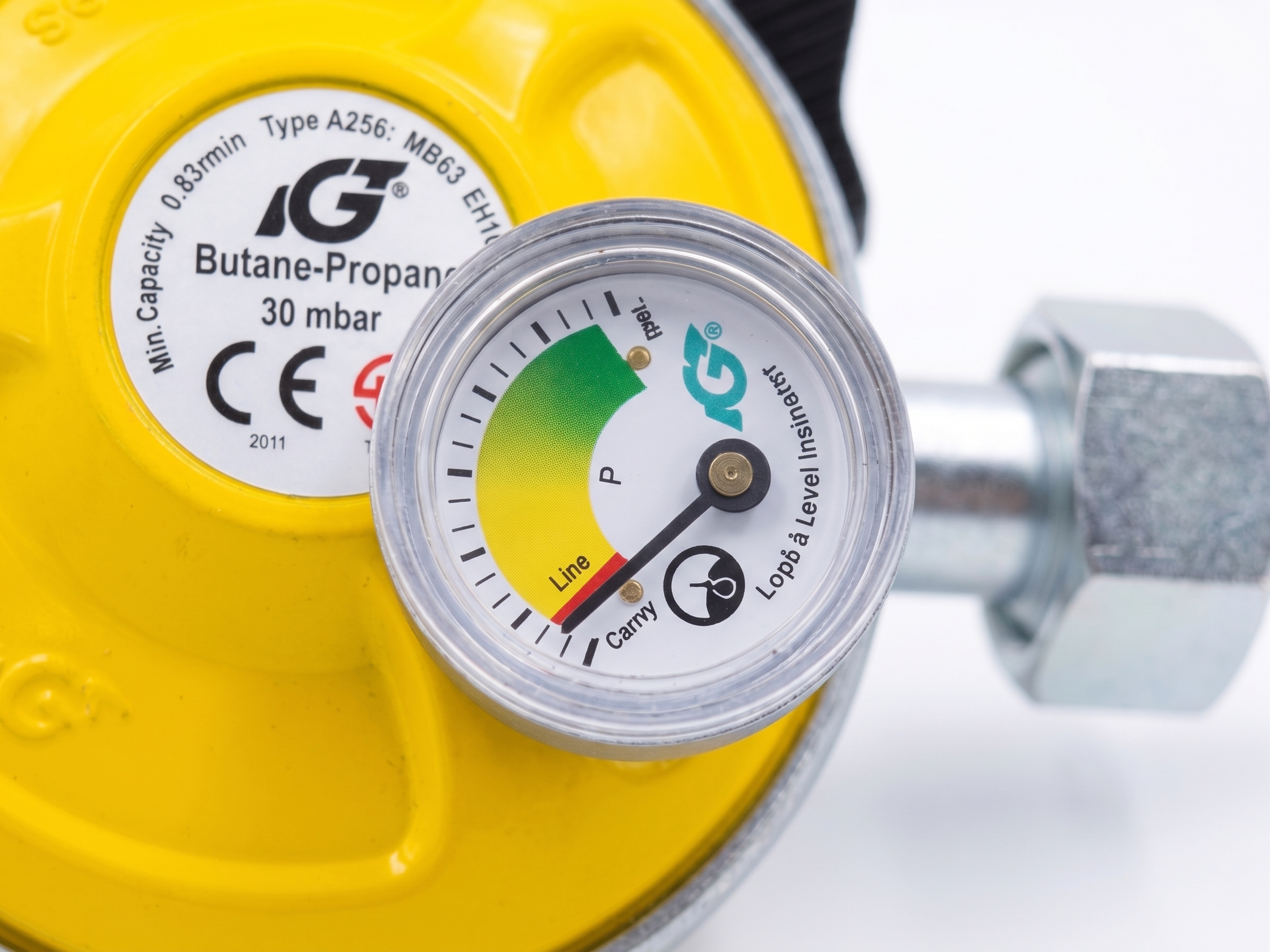
If you have an IGT gas regulator with a built-in manometer (pressure gauge), this is by far the fastest and most reliable way to check your entire gas system for leaks. It tests every connection point at once — regulator-to-cylinder, hose-to-regulator, hose-to-stove, and even the stove valves — in a single two-minute test.
Here is how to do it:
- Connect the IGT regulator to your gas cylinder normally. Make sure the snap-on collar clicks firmly onto the cylinder valve.
- Close all stove valves — turn every burner knob to the OFF position so no gas is flowing through the system.
- Open the cylinder valve — gas fills the line and pressurizes the system. The manometer needle will rise and settle at a reading.
- Watch the needle for 2 minutes — if the needle holds perfectly steady, your entire system is airtight. No leaks anywhere.
- If the needle drops — even slightly — it means gas is escaping somewhere in the line. There is a leak at one of the connection points, in the hose, or at a stove valve.
This test is definitive. A steady needle means you are safe. A dropping needle means you have a problem that needs fixing before you cook. For a more detailed explanation of how to read the manometer zones, read our complete manometer guide.
Method 2: Soap Water Test (Traditional — 5 Minutes)
The soap water test has been used in Nepal for decades. It works, but it only checks one connection point at a time, so you need to test each joint separately.
Here is how to do it:
- Mix soapy water — use dish soap or laundry detergent mixed with water. You want a solution that produces easy bubbles.
- Open the cylinder valve with all stove valves closed, so the system is pressurized.
- Apply soapy water to each connection point with a brush, sponge, or your finger:
- Where the regulator connects to the cylinder valve
- Where the hose connects to the regulator outlet
- Where the hose connects to the stove inlet
- Along the full length of the hose (especially bends and kinks)
- Watch for bubbles — if bubbles form and grow at any point, gas is leaking from that joint. The bigger and faster the bubbles, the larger the leak.
- Fix the leak — tighten the clamp, replace the washer, or replace the hose. Then test again.
The soap water test is reliable but has limitations. It can be messy, it only tests where you apply the solution (you might miss a spot), and it does not check internal components like stove valve seats. The manometer test is superior because it checks the entire system at once.
Method 3: Smell Detection (Basic — Ongoing Awareness)
LPG is naturally odourless and colourless. Gas companies add ethyl mercaptan — the chemical that gives LPG its distinctive rotten-egg or sulfur-like smell — specifically so that humans can detect leaks. This smell is your last line of defence.
Train everyone in your household to recognise the smell of gas. This includes children old enough to understand, elderly family members, domestic helpers, and tenants. If anyone smells gas at any time, the response must be immediate:
- Do not touch any electrical switches — no lights, fans, or chargers
- Do not use matches, lighters, or your phone near the smell
- Open all doors and windows immediately
- Close the cylinder valve (turn clockwise)
- Move everyone out of the house to an open area
- Wait at least 15 minutes before re-entering
- Call for help from outside — your gas supplier or a technician
Smell detection is not a substitute for regular testing. Tiny leaks may not produce a noticeable odour, especially in well-ventilated kitchens. Use the manometer test or soap water test at least once a month for proactive leak checking.
How Often Should You Test for Gas Leaks?
At minimum, test your gas system in these situations:
- Every time you change a gas cylinder — the act of connecting and disconnecting the regulator can loosen fittings
- Once a month — a quick manometer test takes 2 minutes and catches slow leaks before they become dangerous
- After any hose maintenance — if you moved the stove, replaced a clamp, or adjusted the hose, test the system before cooking
- Before festival seasons — Dashain, Tihar, and other festivals mean extended cooking sessions; test before the marathon begins
- If you hear hissing — any unusual sound near the gas setup warrants an immediate test
- If you smell gas — even faintly, test immediately
What to Do If You Find a Leak
If any test method reveals a leak:
- Close the cylinder valve immediately
- Ventilate the kitchen — open windows and doors
- Identify the leak source — which joint is leaking? Is it the regulator connection, the hose, or a stove valve?
- Fix the issue — tighten clamps, replace the hose if cracked, replace worn washers, or replace the regulator if the fault is there
- Test again after the fix — confirm the leak is resolved before using the stove
If you cannot identify or fix the leak, do not use the stove. Contact a qualified gas technician or reach out to our support team for guidance.
Frequently Asked Questions
Can I check for gas leaks without any special tools?
Yes. The soap water test requires only dish soap and water. The smell test requires no tools at all. However, the manometer test (available with the IGT gas regulator) is the fastest and most accurate method — it checks the entire system at once in 2 minutes.
How do I know if my gas hose is leaking?
Run the soap water test along the entire hose length, paying special attention to the connection points at each end and any bends or kinks. If you see bubbles forming, gas is escaping from that spot. If the hose is cracked or stiff, replace it entirely — patching a gas hose is never safe.
Is the rotten-egg smell always present during a gas leak?
Not always. Very small, slow leaks may not produce a strong enough odour to notice, especially in kitchens with good ventilation. This is why regular testing with the manometer or soap water method is important — it catches leaks that your nose might miss.
Does the IGT regulator detect leaks automatically?
The IGT regulator's automatic excess-flow shut-off activates during sudden, large leaks — like a hose rupture or disconnection. For small, slow leaks (a loose clamp, a pinhole), the built-in manometer allows you to detect them during a 2-minute pressure test. Both features work together to keep you safe.