Dashain is the biggest festival in Nepal. Families gather from across the country, kitchens run from early morning until late at night, and the stove barely gets a break for ten straight days. More cooking means more gas usage, more cylinder swaps, and more chances for something to go wrong.
Every year during Dashain, Nepal reports preventable kitchen gas accidents — fires from cracked hoses, leaks from loose fittings, and burns from unattended stoves in crowded kitchens. Most of these accidents could have been avoided with basic precautions that take less than five minutes.
This guide covers seven practical gas safety tips specifically for the Dashain festival season. Whether you are cooking khasi ko masu for twenty relatives or preparing sel roti for the neighborhood, these steps will keep your family safe while you celebrate.
1. Inspect Your Gas Hose Before the Cooking Marathon Begins
The rubber hose connecting your gas cylinder to the stove is the most vulnerable part of your entire LPG setup. It sits close to heat, gets bent and twisted during cylinder changes, dries out over time, and is a favourite target for rodents — especially during the cooler months leading up to Dashain.
Before Dashain cooking starts, do a thorough hose inspection. Run your fingers along the entire length of the hose from the regulator to the stove connection. Feel for cracks, hardness, or soft mushy spots. Bend the hose gently — if it resists bending or you see visible surface cracks, the hose is past its safe life and needs replacement.
Check both connection points. The jubilee clips (metal clamps) at each end should be tight and rust-free. A loose clamp at the stove end or the regulator end is a gas leak waiting to happen. Tighten them with a screwdriver, or better yet, upgrade to stainless steel tightening clamps that hold under vibration.
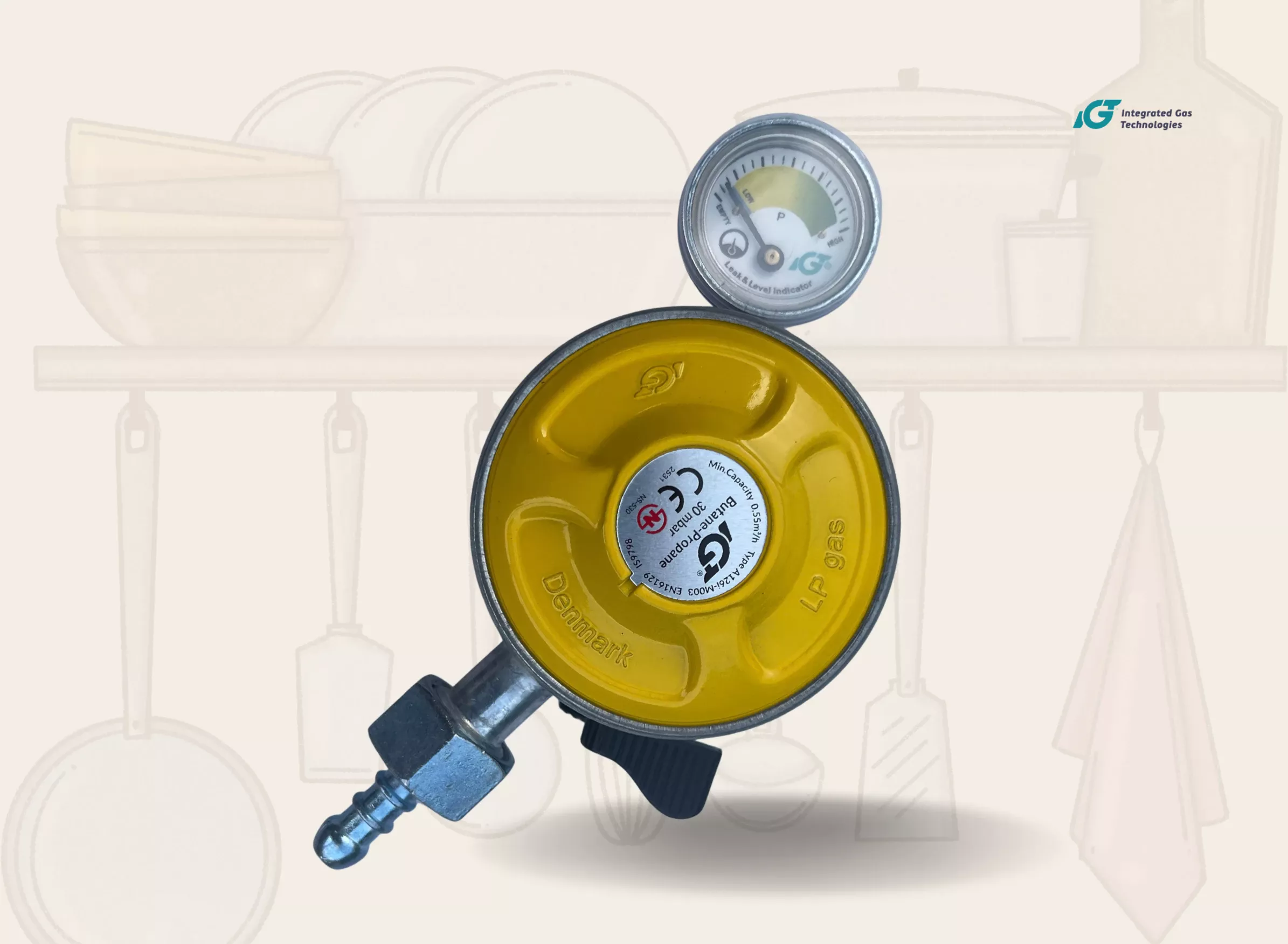
If you have an IGT gas regulator with a built-in manometer, you can confirm the entire line is airtight in under two minutes. Connect the regulator to the cylinder, close all stove valves, and watch the pressure gauge needle. If it holds steady in the green zone, your system is leak-free. If the needle drops, you have a leak somewhere — find and fix it before cooking begins.
2. Never Leave a Lit Stove Unattended When Guests Are Around
During Dashain, the kitchen becomes the busiest room in the house. Children are running in and out, elderly relatives are helping with preparation, and everyone wants to be near the food. This is exactly the environment where accidents happen.
Assign one responsible person to watch active burners at all times. This is not optional — it is the single most effective way to prevent burns and kitchen fires during festival cooking. If the designated person needs to step away even for a minute, turn the stove off.
Keep children at least an arm's length away from the stove and from pots of boiling meat and dal. Hot oil and khasi ko masu pots are the most common cause of Dashain kitchen burns in Nepal. Consider placing the stove away from the main walking path if your kitchen layout allows it.
Never leave oil heating on the stove unattended. Oil fires are one of the most dangerous kitchen emergencies — they spread in seconds and cannot be extinguished with water. If oil catches fire, turn off the gas immediately and smother the flames with a metal lid or wet cloth. Never throw water on burning oil.
3. Keep a Spare Cylinder, but Store It Correctly
Running out of gas mid-feast is a Dashain tradition nobody wants. Having a spare cylinder ready makes sense — but how you store that spare cylinder matters enormously for safety.
Store the spare cylinder upright, in a ventilated area away from the stove and any heat source. The cylinder should never be lying on its side — a horizontal cylinder can allow liquid LPG to reach the valve, creating dangerous pressure when connected. Keep it in a spot where air can circulate freely, not in a closed store room, cupboard, or under the kitchen sink.
Make sure the safety cap is on the spare cylinder valve until you are ready to use it. Never store a spare cylinder with a regulator attached — if the valve develops a slow leak, gas will accumulate in the storage area without anyone noticing.
When you need to swap cylinders during Dashain, do it in a well-ventilated area. Turn off the stove first, then disconnect the old cylinder, then connect the new one. Never swap cylinders near an open flame. And always check the current LPG price before buying your spare — use our daily Nepal LPG gas price checker to confirm the NOC rate and avoid being overcharged.
4. Ventilate Your Kitchen — Open a Window While Cooking
During Dashain, the stove runs for hours on end. Sel roti frying in the morning, dal-bhat for twenty people at lunch, meat preparation in the afternoon, and snacks in the evening. This level of continuous cooking in a closed kitchen creates two problems: carbon monoxide buildup and heat buildup.
LPG burns cleanly when there is enough oxygen. But in a sealed kitchen where burners have been running for hours, oxygen levels drop and combustion becomes incomplete. This produces carbon monoxide — an odourless, colourless gas that causes headaches, dizziness, and in extreme cases, death. You will not smell it, and by the time you feel symptoms, you may already be in danger.
The fix is simple: keep at least one window open whenever the stove is running. If your kitchen has an exhaust fan, turn it on. If it does not, crack open a window or door to allow fresh air circulation. This single habit eliminates carbon monoxide risk and keeps the kitchen comfortable for the person cooking.
5. Turn Off the Regulator and Cylinder Valve at Night
After the last meal is served and the kitchen is cleaned up, close the regulator valve and the cylinder valve before going to bed. This takes five seconds and eliminates overnight slow-leak risk entirely.
Most slow gas leaks happen at night when nobody is in the kitchen to notice the faint smell of mercaptan (the chemical added to LPG so you can detect it). Over several hours, even a tiny leak from a loose connection or a worn-out valve seat can fill a closed kitchen with enough gas to cause an explosion when someone turns on a light switch or strikes a match in the morning.
Make it a Dashain rule in your house: the last person out of the kitchen closes the gas. If you have an IGT gas regulator, the automatic excess-flow shut-off provides an additional layer of protection — but turning off the valve at night is still the right practice. Belt and suspenders.
6. Know the Rotten-Egg Smell Emergency Drill
LPG is naturally odourless. Gas companies add a chemical called ethyl mercaptan to give it that distinctive rotten-egg smell so you can detect leaks. Every person in your house during Dashain — including visiting relatives and elderly family members — should know what to do if they smell gas.
The drill is simple and non-negotiable:
- Do not touch any electrical switches — not lights, not fans, not phone chargers. A single spark from a switch can ignite accumulated gas.
- Do not light matches or lighters — this sounds obvious, but in panic situations people forget.
- Do not use your phone inside the kitchen — mobile phones can produce tiny sparks.
- Open all doors and windows immediately — let the gas dissipate naturally through ventilation.
- Close the cylinder valve — turn the valve handle clockwise to shut off gas supply at the source.
- Get everyone out of the house — move to an open area and wait at least 15 minutes before re-entering.
- Call for help from outside — contact your gas supplier or a qualified technician.
Print this list and put it on your kitchen wall before Dashain starts. For a more detailed walkthrough, read our complete LPG safety guide.
7. Upgrade Once: Get Automatic Shut-Off Protection
Festival kitchens are chaotic — children underfoot, multiple dishes going at once, relatives helping who are not familiar with your setup, and cylinder swaps happening more frequently than usual. This is exactly the situation where a hose can get pulled loose, a connection can fail, or a worn rubber pipe can finally give way.
A genuine Danish IGT gas regulator solves this problem permanently. The regulator contains an internal excess-flow valve that monitors gas flow in real time. Under normal cooking conditions, gas flows freely to your stove. But the instant gas flow spikes — because a hose ruptured, pulled off, or cracked — the valve locks shut in under 0.1 seconds. Gas stops flowing completely. No leak, no buildup, no fire.
The IGT regulator also includes a built-in manometer (pressure gauge) that lets you test your entire gas system for leaks in two minutes — without soap water, without a technician, just by watching the gauge needle. Green zone means safe. Needle dropping means there is a leak somewhere that needs fixing.
It is a one-time upgrade that costs less than a single Dashain feast. The regulator fits all standard Nepal gas cylinders — Nepal Gas, Siddhartha, Everest, Sugam, Surya, Baba, and 35+ other brands. It installs in 60 seconds without tools. And it comes with a 2-year full replacement warranty valid across all 77 districts.
Before the Dashain rush, order from our official store with free 24-hour Kathmandu Valley delivery and Cash on Delivery available nationwide.
Quick Reference Checklist
Print this and tape it to your kitchen wall before Dashain:
- ✅ Inspect gas hose for cracks and loose clamps
- ✅ Test for leaks using manometer or soap water
- ✅ Assign one person to watch active burners
- ✅ Store spare cylinder upright in ventilated area
- ✅ Keep at least one window open during cooking
- ✅ Turn off regulator and cylinder valve at night
- ✅ Teach all family members the gas smell emergency drill
- ✅ Consider upgrading to automatic shut-off protection
Frequently Asked Questions
How do I check for gas leaks before Dashain?
If you have an IGT regulator with a manometer, connect it to the cylinder, close all stove valves, and watch the gauge needle. A steady needle means no leaks. Without a manometer, apply soapy water to every connection point — hose-to-regulator, hose-to-stove, and regulator-to-cylinder. Bubbles mean a leak exists at that joint.
Can I store a spare gas cylinder inside my kitchen?
You can, but it must be stored upright in a well-ventilated spot away from the stove, heat sources, and direct sunlight. Never store it in a closed cupboard. The safety cap must be on the valve when not in use.
What should I do if I smell gas during Dashain cooking?
Do not touch any electrical switches or light matches. Open all doors and windows immediately, close the cylinder valve, get everyone out of the house, and call for help from outside. Do not re-enter until the gas has fully dissipated — at least 15 minutes.
Does the IGT gas regulator work with all Nepal gas cylinders?
Yes. The IGT regulator uses a universal 25.6mm snap-on collar that fits all standard domestic LPG cylinders in Nepal including Nepal Gas, Siddhartha, Everest, Sugam, Surya, Baba, and 35+ other brands. Check our cylinder compatibility guide for the full list.
Happy Dashain 2083 — safe kitchen, happy family. Share this guide with relatives who are hosting big gatherings this year.