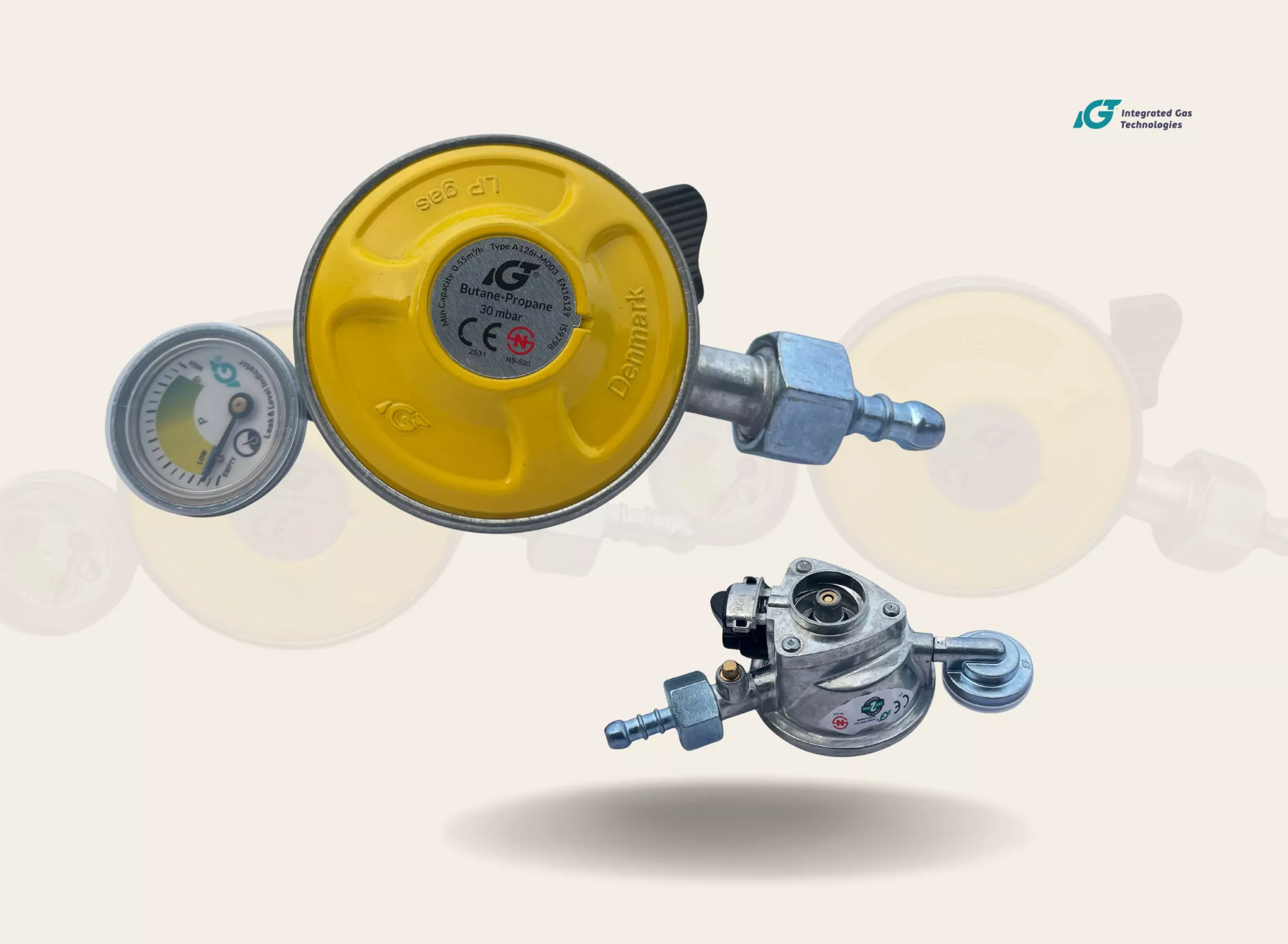
When you see the price of an IGT gas regulator and compare it to the Rs. 200 ordinary regulator at your local hardware shop, the natural question is: is the automatic shut-off feature really worth the extra cost? This guide gives you a straightforward cost-benefit analysis — not with marketing claims, but with practical numbers and real-world risk assessment.
The Cost of an IGT Regulator
The IGT Denmark Auto-Cut Regulator (Model A126i-M003) is available as a standalone regulator or as a complete safety kit with a flame-retardant hose. Visit the product page for current pricing.
This is a one-time purchase. The regulator lasts for years (international standards recommend replacement every 5–10 years). The 2-year full replacement warranty covers manufacturing defects. There are no subscription fees, no maintenance costs, and no refill charges. You buy it once, install it in 60 seconds, and it protects your kitchen for years.
The Cost of a Kitchen Gas Fire
Now consider what a kitchen gas fire costs in Nepal. These are not hypothetical numbers — they are based on real-world scenarios that play out across the country every year:
- Medical treatment for burns: Burn treatment in Nepal ranges from Rs. 50,000 for minor burns to Rs. 5,00,000 or more for severe burns requiring grafting and extended hospitalization at hospitals in Kathmandu.
- Kitchen and home damage: A gas fire can destroy the entire kitchen — stove, cabinets, utensils, appliances, and stored food. Repair or replacement costs easily reach Rs. 1,00,000 to Rs. 5,00,000 depending on the extent of damage.
- Lost wages: Burn patients often spend weeks or months unable to work. For daily-wage earners and small business operators, this lost income compounds the financial devastation.
- Psychological trauma: Fire survivors — especially children — often experience lasting fear, anxiety, and nightmares. This is a real cost that cannot be measured in rupees but profoundly affects quality of life.
- Worst case — loss of life: The ultimate cost. No amount of money replaces a family member lost to a preventable gas accident.
The Risk Equation
The question is not "will a gas fire definitely happen if I use an ordinary regulator?" The question is "what is the risk, and is it worth accepting when the alternative costs so little?"
Consider the factors that increase your risk:
- Your gas hose is rubber and exposed to heat, rodents, and aging
- Your kitchen has limited ventilation
- You have young children who might pull or bump the gas line
- Your clamps are old, rusty, or standard spring-type jubilee clips
- You leave the cylinder valve open overnight
- Your regulator is more than 5 years old or of unknown age
- You cook frequently for large gatherings (Dashain, Tihar, weddings)
If even two or three of these apply to your household, the risk of a hose failure causing a gas leak is not trivial. And when a hose fails with an ordinary regulator, there is zero automatic protection — gas flows freely into your kitchen until someone notices and manually closes the valve.
What Automatic Shut-Off Actually Does for You
The IGT regulator's excess-flow shut-off valve activates in under 0.1 seconds when a hose ruptures or disconnects. Here is what that 0.1-second response gives you:
- No gas enters the room — the valve closes before any meaningful amount of LPG can escape through the broken hose
- No explosive gas cloud forms — because gas flow was cut immediately, there is nothing to accumulate at floor level
- No ignition risk — without a gas cloud, there is nothing for a spark to ignite
- Time to react — you notice the stove stopped working, you inspect, you find the broken hose, and you fix it. No panic, no emergency, no fire
Compare this to what happens with an ordinary regulator: gas flows freely, accumulates, and waits for a spark. The outcome depends entirely on how quickly someone smells the gas, how quickly they react, and whether they make the right decisions in a panic situation. Human response is unreliable under stress.
The Break-Even Calculation
The cost difference between an IGT regulator and a standard regulator is the price of your safety upgrade. Spread this over the product lifespan (5+ years), and the daily cost of automatic shut-off protection is less than the cost of a cup of tea.
Compare that daily cost to the potential cost of a single gas accident — Rs. 50,000 to Rs. 5,00,000 in medical bills and property damage, plus lost income and trauma. The IGT regulator pays for itself the moment it prevents even a single gas leak incident.
The Built-In Manometer Adds Even More Value
Beyond the shut-off feature, the IGT regulator includes a calibrated manometer that lets you test your gas system for leaks in 2 minutes and check your remaining gas level. This prevents two common problems:
- Undetected slow leaks — a monthly manometer test catches slow leaks from worn clamps, pinhole hose damage, or degraded stove valves before they become dangerous
- Running out of gas unexpectedly — the yellow zone warning tells you when your cylinder is getting low, so you can arrange a refill before you run out during cooking
Frequently Asked Questions
How does the IGT regulator compare to buying a gas leak detector alarm?
A gas leak detector alarm alerts you when gas is already leaking — you still have to react, close the valve, and evacuate. The IGT regulator stops gas flow automatically in 0.1 seconds, before any alarm would even trigger. The IGT approach prevents the leak from becoming a problem in the first place.
Will insurance cover a gas fire if I use an ordinary regulator?
Home insurance policies in Nepal vary, but many do not cover gas fire damage, or have significant exclusions and deductibles. An IGT regulator is far cheaper than any insurance premium and directly prevents the event rather than compensating for it after the fact.
Is the IGT regulator a one-time purchase?
Yes. You buy the regulator once. It comes with a 2-year full replacement warranty. There are no ongoing costs, subscription fees, or maintenance charges. International standards recommend replacing gas regulators every 5–10 years.