Commercial kitchens in Nepal — restaurants in Thamel, hotels in Pokhara, catering operations in Biratnagar, dhabas along the highway — handle far more gas than any household kitchen. Multiple burners running simultaneously, larger cylinders, frequent cylinder changes, and staff who may not have safety training create a risk environment that is categorically different from home cooking.
A gas fire in a commercial kitchen does not just damage the kitchen — it can destroy an entire business, injure staff and customers, and create legal liability. This guide covers the essential LPG safety practices that every restaurant, hotel, and commercial kitchen in Nepal must follow.
The Risk Profile: Why Commercial Kitchens Are Different
A typical home kitchen runs one or two burners for a few hours a day. A commercial kitchen may run four to ten burners continuously for 12 to 16 hours a day. The gas consumption is five to ten times higher. The hoses, regulators, and connections are under constant stress. Staff are busy, distracted, and rotating through shifts.
Commercial kitchens also use larger equipment — tandoors, commercial woks, high-BTU burners, and sometimes multiple cylinders connected through manifolds. Each additional component and connection point is a potential failure point. The more complex the gas system, the more rigorous the safety practices need to be.
Equipment Standards for Commercial LPG Systems
Hardware-shop regulators and thin rubber hoses have no place in a commercial kitchen. The equipment must match the demand and risk level:
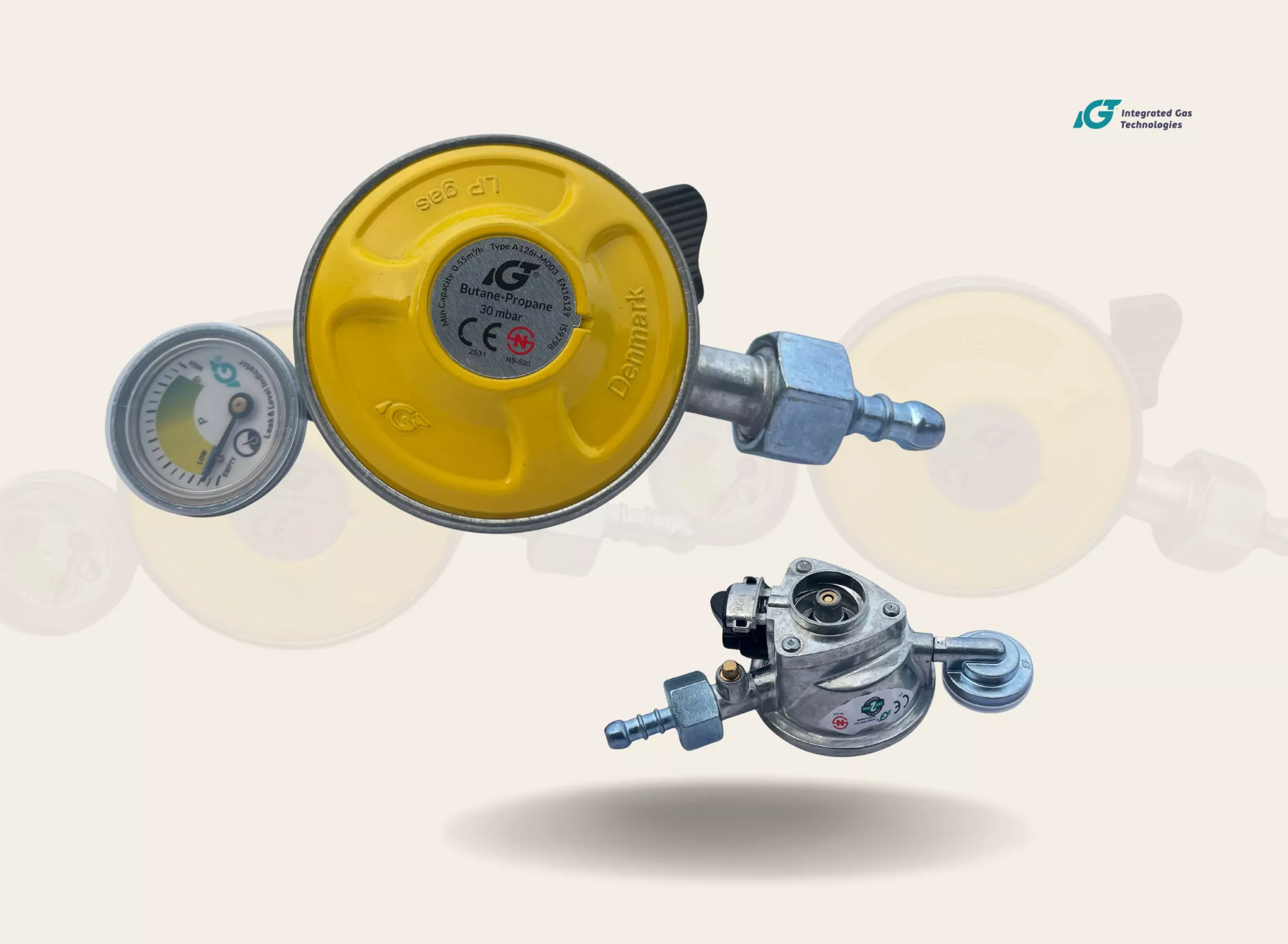
- Commercial-grade regulators — use regulators rated for the flow demand of your burner configuration. For standard commercial kitchens, the IGT gas regulator provides automatic excess-flow shut-off protection — critical in environments where hose damage risk is high due to foot traffic, equipment movement, and frequent cylinder changes.
- Flame-retardant safety hoses — commercial kitchens should never use plain rubber hoses. Certified flame-retardant safety hoses resist heat, rodent damage, crushing from heavy equipment, and accidental cuts. They last longer and maintain integrity under continuous use. Read our hose comparison guide.
- Industrial-grade clamps — stainless steel worm-drive clamps at every connection point, checked and tightened weekly.
- Cylinder storage area — a designated, ventilated area separate from the cooking area for cylinder storage. Cylinders must stand upright with safety caps on when not connected.
Ventilation Requirements
A commercial kitchen with multiple high-powered burners produces enormous amounts of heat, combustion gases, and grease-laden air. Proper ventilation is not optional — it is essential for preventing carbon monoxide buildup and creating a safe working environment.
Install commercial exhaust hoods over every cooking station. Ensure exhaust fans have sufficient capacity for the kitchen size. Maintain a fresh air supply to replace the air being exhausted. Clean grease filters weekly — clogged filters reduce exhaust efficiency and are themselves a fire hazard.
Staff Training Protocol
Every person who works in the kitchen — not just the head chef — must know:
- How to properly connect and disconnect a gas cylinder
- How to perform a soap water or manometer leak test
- How to identify the smell of leaking gas
- The emergency procedure: close valve, ventilate, evacuate, call for help
- Location of the fire extinguisher and how to use it
- Never to use water on a grease fire
Conduct a 15-minute safety briefing for all new kitchen staff. Repeat it quarterly. Post emergency procedures in Nepali (and English if applicable) on the kitchen wall where they are visible from every work station.
Daily, Weekly, and Monthly Safety Checks
Daily (before opening):
- Visual check of all hose connections
- Confirm all regulators are properly seated on cylinders
- Test each burner — blue flame confirms proper combustion
- Verify exhaust fans and ventilation are working
Weekly:
- Tighten all clamps and connection fittings
- Run a leak test on every connection point (manometer or soap water)
- Inspect hoses for damage, kinks, or wear
- Check fire extinguisher pressure gauge and accessibility
- Clean exhaust hood grease filters
Monthly:
- Full hose inspection — feel entire length for cracks, soft spots, or stiffness
- Check regulator body for corrosion or physical damage
- Verify cylinder storage area is clean, ventilated, and organized
- Review and update emergency contact numbers
Fire Suppression Equipment
Every commercial kitchen in Nepal must have at least one ABC-type dry chemical fire extinguisher within arm's reach of the cooking area. For larger kitchens, place extinguishers at multiple stations so that no work area is more than 5 metres from one.
Additionally, keep a fire blanket near the main cooking station. Fire blankets are effective for smothering small pan fires and oil fires where using an extinguisher might spread burning oil.
Train every kitchen staff member to use the fire extinguisher. An extinguisher that nobody knows how to operate is useless in an emergency.
Automatic Shut-Off Protection for Commercial Kitchens
In a busy commercial kitchen, hose damage is a real and frequent risk. Staff move heavy equipment, pull hoses when rearranging workstations, and step on hoses during rush hours. A hose that pulls off or cracks during peak service can release LPG near open flames — exactly the most dangerous scenario possible.
The IGT gas regulator provides a critical safety layer for commercial kitchens. If a hose ruptures or disconnects, the regulator's excess-flow valve shuts off gas in under 0.1 seconds — faster than any person can react. This automatic protection works regardless of whether staff notice the problem, how busy the kitchen is, or how many burners are running.
For commercial establishments looking to equip multiple cooking stations with IGT regulators, contact us for bulk pricing.
Frequently Asked Questions
How many fire extinguishers does a commercial kitchen need?
At minimum, one ABC-type dry chemical extinguisher within 5 metres of the cooking area. Larger kitchens with multiple cooking stations should have one extinguisher per station plus a fire blanket near the primary stove.
Can we use the IGT regulator for high-volume commercial cooking?
The IGT A126i-M003 is designed for standard domestic cylinders and is suitable for small to medium commercial kitchens. For large commercial operations with high-flow requirements, contact our team for specific recommendations.
How often should commercial kitchen gas equipment be inspected?
Daily visual checks, weekly leak tests and clamp tightening, and monthly full inspections of all hoses, regulators, and connections. Replace hoses every year in commercial environments due to higher wear and tear.